





Empowering Businesses to Access Funding and Grow with Confidence

Zobnica is your trusted partner in navigating tenders, grants, and strategic projects. We help you identify opportunities, prepare successful applications, and manage projects from start to finish.

Contact Us

Current Tenders and Open Calls

Stay informed about the latest funding opportunities, EU programs, and government tenders currently open for applications. Our experts ensure you never miss a chance to secure financial support for your business growth.
Deadline: 31/12/2030

National investment loans

Entrepreneurs can finance investments and part of their business (working capital – up to 30% of the loan). The loan amount can be between 25.001,00 and 150.000,00 euros. The interest...
View Details
Deadline: 31/12/2029

Small loans for female entrepreneurs and beginner entrepreneurs

Female entrepreneurs (more than 50% ownership for at least 2 years prior to the request) or beginner entrepreneurs (natural persons or existing entities not older than 3 years) can finance...
View Details
Deadline: 12/02/2026

Modernization of technologies in pre-industrial wood processing

The tender finances the purchase of machines, tools, devices, and equipment in the process of wood extraction and for silvicultural works, as well as the purchase of machines, tools, devices,...
View Details

Why Businesses Trust Zobnica

We take your project seriously. By limiting our project intake, we guarantee quality execution and full support throughout the process.
View All Tenders
Antonela owner of zobnica seating on the bench
Every project we take on is treated as a partnership — your success is our success.
Years of Experiance
+0
Projects
+0
Clients
+0
Sucess Rate
+0%

Latest News and Insights

Explore our latest updates, expert insights, and funding opportunities designed to keep your business competitive.
Person writing in notebook
EU Funds
04/03/2024

A Guide for Farmers

Whether you’ve just started or have been planning to apply for a non-reimbursable EU grant for some time, I believe you have various questions and dilemmas and are looking for answers.

This manual is the ideal starting point for your search for answers, and it was created after numerous conversations and meetings with farmers who have never applied for or implemented projects co-financed by EU funds.

The manual stems from the need to familiarize users with the fundamental prerequisites/concepts related to agricultural holdings viewed from the aspect of applying for non-reimbursable EU tenders.

The good news that I must emphasize right here is that with the purchase of this manual, you also receive half an hour of telephone consultations during which I will give you answers to your questions related to the content of the manual, as well as free advertising of your products and services on our portal Ethno Dalmacija. Our cooperation doesn’t have to end here; on the contrary, we dare to say that this is just the beginning, and you can see what else we can do for you and how we can help you on our website, where you can choose something for yourself. The price of the guide in PDF format is 70.00 Euros, which you can pay using this payment slip and confirm to us by email: info@zobnica.hr. Once we receive the payment, we will send you the guide by email and arrange a time for telephone consultations!

Take a look at the guide DownloadPay and send an email to info@zobnica.hrDownload

Read more
Person writing in notebook
Implementation
17/07/2023

Procurement within the scope of projects financed by EU funds

Public procurement holds a significant place in ensuring the most efficient expenditure of public funds. Within the framework of EU tenders, grants are allocated to entrepreneurs, representing a vital incentive for the realization of projects that contribute to their further development and market competitiveness. Entrepreneurs who have applied their projects for certain tenders and have received a funding decision for them, must also take into account procurement for the activities foreseen by the project in the later implementation phase for successful realization and achievement of project goals. Allocated grants may also be subject to repayment if certain irregularities are found during the procurement procedure itself. Financial corrections are applied if the allocated funds were not used for the purposes for which they were intended. The conduct of procurement procedures is not reserved only for obligors of the application of the Public Procurement Act. Legal entities and sole proprietorships that are not obligors of the Public Procurement Act (NOJN) must carry out procurement while respecting certain rules.
Person writing in notebook
Why do I have to conduct a procurement procedure even though I am not a legal obligor? The fundamental principles of public procurement are key to “introducing order” within the framework of market competition among entrepreneurs. The main principles, on the one hand, limit entrepreneurs (in this case, contracting authorities) who are prevented from favoring certain entities to contract jobs (e.g., rigging jobs for family members, acquaintances, and the like), while on the other hand, they organize the market, which enables equal treatment for all entities – potential bidders, according to which they can equally participate in procedures for obtaining and executing work. What is the main framework for conducting procurement for non-obligors of public procurement (NOJN)? According to the Public Procurement Act, basic principles that obligors must respect are defined to prevent illegal actions that would impede fair competition of economic operators in the market. Just like obligors of the application of the Public Procurement Act, non-obligors of the application of the Act must also respect certain principles. NOJNs must adhere to the following principles when conducting the procurement procedure:
  • Avoiding conflicts of interest
  • Principle of proportionality
  • Principle of equal treatment
  • Principle of non-discrimination
  • Principle of rational and economic spending of funds
What are the steps in conducting the procurement procedure for NOJN?
  1. Preparation and publication of the call for tenders
  2. Defining capacity conditions, the subject of procurement, criteria for the selection of the bid, and deadlines for submitting bids
  3. Review and evaluation of received bids
What are the thresholds for applying the rules for non-obligors of the application of the Public Procurement Act?
  1. Procurement procedure with a single bidder For procurement of goods, works, and services with an estimated value up to HRK 150,000.00 – the contracting authority is not obliged to prepare a call for tenders, and in that case, there is no formal review and evaluation of bids conducted in the procurement procedure with mandatory publication.
  2. Procurement procedure with mandatory publication. For procurement of goods, works, and services with an estimated value exceeding HRK 150,000.00 – the contracting authority is obliged to publish the call for tenders on the website www.strukturnifondovi.hr, and in that case, they perform a formal review and evaluation of the received bids.
  3. Special procurement procedures – conducting the procurement procedure by sending or publishing a call for tenders to one or more bidders regardless of the estimated value of the procurement, possible only in exceptional cases.
Calculator next to the papers
What if I do not conduct procurement in accordance with the defined rules that apply to persons who are not obligors of the Public Procurement Act? Properly conducted procurement ultimately ensures the proper implementation of the EU project. The consequence of errors in the procurement procedure, for the beneficiary of grants, can lead to the occurrence of financial corrections, i.e., the complete repayment of the allocated funds. In case of determining irregularities within the scope of project implementation, the competent authority resorts to financial corrections, which are a negative consequence for the project holder. Financial corrections imply the repayment of all or part of the funding paid to the beneficiary, depending on the severity of the determined irregularity. Some examples of applying financial corrections for NOJN
  • Failure to publish the call for tenders
  • Artificial division of contracts to avoid publishing the call for tenders
  • Unjustified use of a special procurement procedure
  • Shortening deadlines
  • Discriminatory technical specifications
What should I pay attention to when conducting procurement procedures?
  • The thresholds for conducting the procedure
  • Grouping of the subject of procurement to avoid the annulment of the procurement procedure
  • Clearly defining the technical specifications of the subject of procurement
  • Clearly defining the capacity conditions of the bidder for the execution of the contract subject
  • Paying attention to deadlines
If you are one of the potential applicants for individual tenders under which you can finance your own projects partly from EU grants, the assumption is that you will have to conduct a procurement procedure for the subject of procurement, which is published on the pages of Structural Funds (https://strukturnifondovi.hr/). Properly conducted procurement is the foundation for the successful implementation of project activities, therefore it is important to properly set up and implement all parts. The article was published on: Women in Adria
Read more
People doing accounting
Finance
01/03/2023

How to avoid falling into overdraft in business

It is not uncommon for entrepreneurs, especially beginners who are still fighting for their place in the market and working to achieve continuous inflows, to encounter a lack of liquid funds needed to cover primarily fixed operating costs (salaries, overhead costs, etc.). In banks where they have opened business accounts, entrepreneurs can contract an allowed overdraft, the so-called “minus,” which they use to compensate for the lack of funds in order to fully cover the incurred costs. Since a negative account balance is quite a burden for every entrepreneur, even though it doesn’t seem so at the beginning when symbolic amounts are used, it is necessary to be careful, and the most important thing is to create a plan that will completely eliminate the use of overdraft. 1. Continuous monitoring of inflows and outflows – Creating a monitoring model in Excel Continuous monitoring of inflows and outflows can significantly affect the sustainability of business in the future. It is important for an entrepreneur to have timely and accurate information so that they can make correct business decisions. Information is available if detailed monitoring is carried out in the company; in this situation, the company’s director has an insight into the state and movement of transactions, which is one of the important steps for making correct decisions. Situations in which decisions are made without prior detailed analysis can lead to business problems and unnecessary borrowing. Creating a model in Excel for entrepreneurs is an excellent tool with which the movement of funds can be clearly monitored, and the current situation can be checked at any time.
People doing accounting
In addition to having a clear insight into the situation at any time (if records are kept regularly), the entrepreneur can take timely measures to secure additional funds, whether it is cutting costs, securing additional income by contracting new jobs, or regular collection of receivables. It is also important to detail the inflows that the entrepreneur realizes from each individual customer, so that they know how to recognize key customers, but also to terminate business cooperation with those who are a burden to the business. In the case of outflows, it is necessary to monitor and analyze each individual supplier in such a way as to define appropriate payment and delivery deadlines, monitor the quality of the service (goods, works), and changes in prices. 2. Creating a plan of inflows and outflows for a certain time period and comparing the plan with the actual situation Plans are made for a certain period of time; in practice, quarterly, semi-annual, and annual liquidity plans are mostly created. When planning future business, it is important that the plan was created after a certain time during which inflows and outflows were monitored, and an impression of their amount was gained. If it is a beginner entrepreneur, the inflow plan can be based on concluded business cooperation agreements, according to which they can roughly define monthly inflows, while fixed costs are generally known. A plan is always a plan, and of course it can be changed during the period, but it gains its true value only after comparison with the actual situation. Deviations, especially negative ones, are important for analyzing the cause of that negative deviation. They warn us about the existence of a certain problem, which we can describe in the following situation. The entrepreneur’s inflows in the semi-annual period are 20% lower than planned. Although income was generated, the receivable was not collected. It was determined that in the semi-annual period, the customer fell into financial difficulties and has problems with payment, which was reflected in the business of the observed company. The mentioned situation leads us to the next important step that also affects the company’s liquidity. 3. Recognizing problems and defining policies with customers and/or suppliers Deviations of the actual from the planned cash flow projection and problem recognition lead to the need to redefine the terms with customers and suppliers. The same can be changed depending on the length of business cooperation. The terms relate to payment deadlines, approval of discounts on services/goods/works, etc. In order for entrepreneurs to properly define the policy with customers, it is necessary to first establish thorough monitoring of each individual customer, and from the monitoring, provide answers to questions that may be focused on: defining discounts, warning whether a reliable customer is up-to-date with payments, whether their income is decreasing, what is the quality of the service, whether they introduce new services. On the other hand, in the case of suppliers, it is also necessary to monitor business, and certainly negotiate the possibility of servicing, securing the object of purchase, and return deadlines. 4. Business seasonality If the activity performed by the entrepreneur is characterized by seasonality, it is necessary to take into account the planning of liquid operations in months with reduced inflow. Monitoring liquidity, at least at the monthly level, can ensure liquid operations throughout the year and prevent potential problems with current liquidity that can be prolonged to a longer period. Monitoring liquidity and projections for the coming months of operation will ensure liquidity in the months when a reduction in the volume of work is evident. Given the type of activity, company owners are sometimes “condemned” to only a few customers/suppliers. If an individual customer also encounters liquidity problems, the resulting situation is reflected in the company, so in such situations it is good to create a certain reserve that will help bridge the problematic period. Account overdraft is an expensive source of financing and should therefore be avoided. This can be achieved with clearly adopted measures and a plan that will ensure business liquidity. Analysis of historical operations, monitoring of current and planning of future operations are measures that every entrepreneur must implement, and monitoring models are an excellent tool that helps directors see how their decisions affect the company’s cash flow and prevent entry into overdrafts on transaction accounts. Article published on: Women in Adria


Read more
Lecor olive oil
EU Funds
04/09/2022

A Success Story: Implementing Support for Young Farmers Under Measure 6.1.1

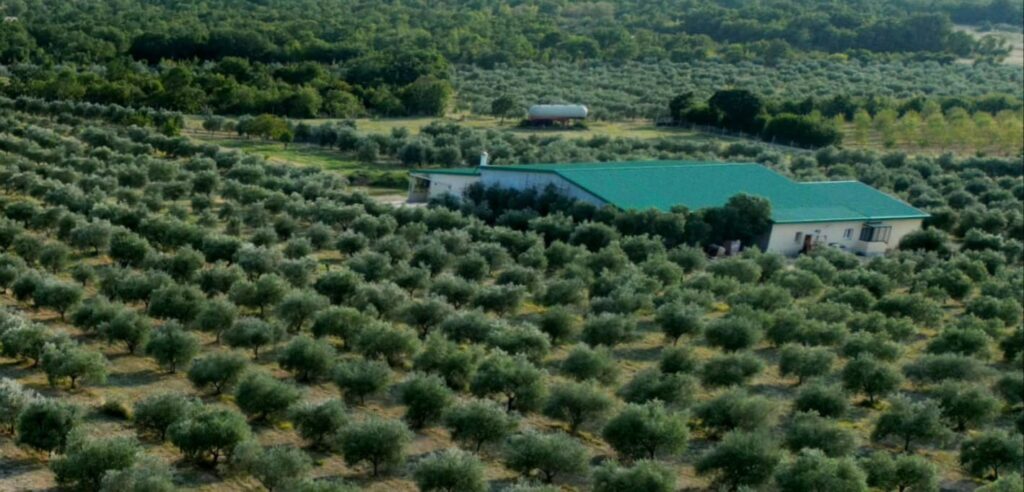
Lecor d.o.o. from Benkovac is a long-standing client of Zobnica d.o.o. Located in the village of Lepuri, Lecor d.o.o. manages a 17-hectare estate featuring an olive grove with over 4,000 olive trees, as well as a state-of-the-art olive processing plant with a capacity of 1,000 kg/h.

Our cooperation with Lecor d.o.o. began back in 2017 with the planning of several projects, all aimed at raising business quality, diversifying activities, and consolidating their offer.

To date, we have achieved the following results:

  • Realized investment under Measure 6.1.1 “Support for young farmers” in the amount of HRK 473,000, of which HRK 370,000 was awarded as non-repayable grants.

  • Ongoing implementation of an investment under Measure 4.2.1 “Increasing value added to agricultural products” – facilities for oil production. The total investment amount is HRK 2,139,573.96, with approved grants amounting to HRK 974,993.72.

  • Ongoing implementation of an investment under Measure 6.2.1 “Support for investment in the creation of non-agricultural activities in rural areas” – launching an olive oil tasting room. The total investment amount is HRK 693,262.00, with approved grants amounting to HRK 370,000.00.

  • Secured credit financing from a commercial bank in the amount of HRK 3,800,000.00.

We hope this is just a fraction of the projects completed for our dear clients, and we look forward to future business ventures.

Yours, Zobnica

Read more
Lady looking at billboard on the airport
Finance
23/04/2022

6 things you must define if you plan to invest in tourist transfers

Since the start of the tourist season is just around the corner, it is time for existing tourism workers, as well as those who are yet to become one, to start preparing for the upcoming season. Apart from those who have already started planning and realizing new investments at the end of the previous season, new entities are appearing on the market, as competitors to the existing service, who will start performing various activities in the tourism sector. Among the various activities in the tourism sector, such as renting accommodation facilities, agencies for organizing excursions, catering activities, one of the competitive activities is certainly the organization, sale, and implementation of tourist transfer services.

What are tourist transfers?

According to the Law on the Provision of Services in Tourism (NN 130/17), tourist transfers are determined as: “… a service contracted for a known traveler (service user), which consists of organizing tourist assistance and the transport of passengers and their luggage between the places of provision of various travel services, and especially between passenger terminals (stations and ports of land, maritime, river and air transport) and accommodation facilities upon arrival and/or return, between accommodation facilities, or to or from the place of provision of some other contracted catering or tourist service” As fundamental characteristics that are important for starting the tourist transfer service, as well as for improving it, it is essential to define the following:

1. Demand

Lady looking at billboard on the airport
Before defining the way to realize the business idea, i.e., earning income from the subject activity, it is first necessary to research whether there is any market justification in terms of demand for the mentioned service. It is important for the future entrepreneur to obtain data that indicates that there is potential for performing the activity. The data that should be analyzed are data on passenger traffic at airports, tourist traffic – arrivals and overnight stays, and depending on the defined transfer routes, it would be good to analyze data on the number of visitors to selected tourist attractions (e.g., national parks, islands, tourist-developed cities, and similar).

2. Offer

To obtain data on the offer, it is necessary to analyze the existing economic entities that are already engaged in tourist transfer activities on the market, i.e., to define the main competitors. The advice is to make a comparison with the main competition and to highlight the strengths and opportunities, as well as the weaknesses and threats in relation to them. Since the market situation changes quickly, the time dimension of the SWOT analysis should be taken into account, and it should be updated as needed and progress tracked in relation to the previous period. The conclusions will certainly result in better decisions and business successes.

3. Location of operation

As with most activities, the location of their performance is very significant. This directly affects the realization of income from the activity we are engaged in, but it is also closely related to the costs associated with the income. Specifically for tourist transfer activities, the location refers to the routes on which the service will take place. Therefore, it is important to consider the preferences of end-users, and to adjust the location of operation to the demand market depending on them.

4. Distribution channels and end-users

Heart shaped island from above
Every start of a business is difficult and carries certain difficulties, which at the beginning mainly relate to gaining a network of business partners, i.e., distribution channels through which economic entities will ultimately reach their end-users. It is important to take care of business partners who will recommend their guests to us in case of overcapacity, or to whom we will forward “surplus” guests in the opposite situation. Distribution channels are extremely important, especially when starting a business. In the case of good cooperation, they can be a “wind in the sails” for the economic entity that is at the very beginning of its business. Good examples of distribution channels for tourist transfer activities are certainly hotels, travel agencies, and private renters, who are a direct link between the economic entity offering the service and the end-users.
Jar with coins and a plant

5. Investment and financing of investments

Investment implies the acquisition of fixed or working assets without which we cannot perform the activity. Whether it is about starting or developing an activity and we must acquire the resources necessary for the activity, define the amounts and methods of financing the investment. The investment can be financed in several ways: with own or borrowed funds, a combination of own and borrowed funds, and non-repayable funds if the economic entity meets the conditions according to specific tenders. If we do not have enough own funds, reaching for some long-term sources of financing is a logical sequence. There is a range of financial instruments on the market through which economic entities can finance their own investments, and when choosing a specific method of financing the investment, the recommendation is for the entrepreneur to consult with a financial expert who will realistically assess the situation, give an opinion, and ultimately prepare a business plan or investment study based on which the investment is assessed. The subject activity is eligible for financing within the financial instruments of micro, small loans, and working capital loans of HAMAG BICRO. Namely, the mentioned institution and its mentioned financial instruments are suitable for entrepreneurs because the funds are placed to the end-user at a significantly more favorable interest rate than those available in commercial banks. Interested registered entities, as well as natural persons who are just starting an activity and do not yet have a registered business entity for the application, must have a developed business plan as its most important part, which proves the profitability of the investment/venture, and even more importantly, the ability to repay the loan. 6. Set goals for the future

It is important for a company to have one or more goals to strive for while conducting business. Thus, one of the goals can be focused on achieving business results (e.g., defining the amount of revenue or the percentage increase in revenue compared to the previous year), which will be achieved based on set tasks. When setting goals, the company must consider several questions. Are the goals verifiable? Will it be known at the end of the period whether the goals have been achieved or not? Are the goals reasonable? Are they set by priority? Are the goals clearly defined? Are the current resources sufficient to achieve certain goals?

Thinking about the previously mentioned characteristics, a company can direct its business towards positive changes, which certainly bring new challenges, but also an additional opportunity for business development. Published on Women in Adria
Read more
View all Articles

Our Core Services

From funding applications to project management and strategic consulting — we deliver end-to-end solutions tailored to your business goals.
Analysis of Financing Possibilities
Read more
Preparation of Applications for HAMAG and Other Loans
Read more
Support in Public Procurement for Non-Obligated Entities
Read more
See All Services

What Our Clients Say

Results speak for themselves. We are proud of the numerous successful projects and stories we have built together with our clients.

“Their detailed business plan was crucial for securing our HBOR loan to purchase business premises, successfully passing the bank’s risk assessment. We highly value their expertise, speed, and understanding of our specific business needs.” Alen Stranjik, Director of Ambitio sana d.o.o. “From my initial idea to opening the doors, Zobnica provided a clear and feasible business plan for my fitness studio. They remain my first choice for reliable calculations and honest advice whenever considering new investments.”

Ana Lozančić
Director of Refit j.d.o.o.

“Since 2017, Zobnica has helped us maximize EU funds to transform our family olive grove into a fully equipped operation. Their team is expert, dedicated, and vigilant in monitoring every implementation phase, doing their job with genuine care.”

Branimir Lepur
Owner of LeCor d.o.o.

“Zobnica guided us through funding options for our agritourism and aquaculture projects, handling everything from analysis to tender preparation. They were accessible, creative in problem-solving, and fully focused on our success—we warmly recommend them.”

Sasa Runjic
CEO of WR Agrotusta d.o.o. and Bivalvi d.o.o.

“Throughout years of collaboration on EU projects, Zobnica has proven to be a reliable and expert partner. Their professionalism, deep knowledge of procedures, and proactive communication make working with them a true pleasure.”

Tomislav Uroda
CEO of iCat d.o.o.

Ready to apply for funding

Don't let your idea remain just words on paper. The path to realization begins with quality preparation and securing funding. Complete our preliminary assessment form – we will analyze your project's eligibility for current funding opportunities and propose the optimal path to securing grants.
Fill the questionnaire

Our References

We take pride in the partnerships we’ve built and the impact we’ve created across industries.

I.22. “Added Value and Product Quality, Promoting Sustainable Fisheries”

The client holds two fishing permits linked to two vessels
Fishing rod

I.22. “Added Value and Product Quality, Promoting Sustainable Fisheries”

The client holds a fishing permit in the small-scale coastal
Fishing rod

I.22. “Added Value and Product Quality, Promoting Sustainable Fisheries”

The client holds two fishing permits linked to two vessels
View All References

Our Partners

We collaborate with national and European organizations, chambers of commerce, and innovation agencies to deliver real impact.

Contact us with confidence.

Let's turn your ideas into reality. Whether you have a fully developed project or just an initial vision, our team is ready to listen. Contact us via phone or email, or schedule a meeting at our office to discuss the details of our collaboration